The Convoy Burden
Generator fuel moves on the same roads and the same resupply cycle as everything else. Each run ties up vehicles, drivers, and security the mission needs somewhere else.
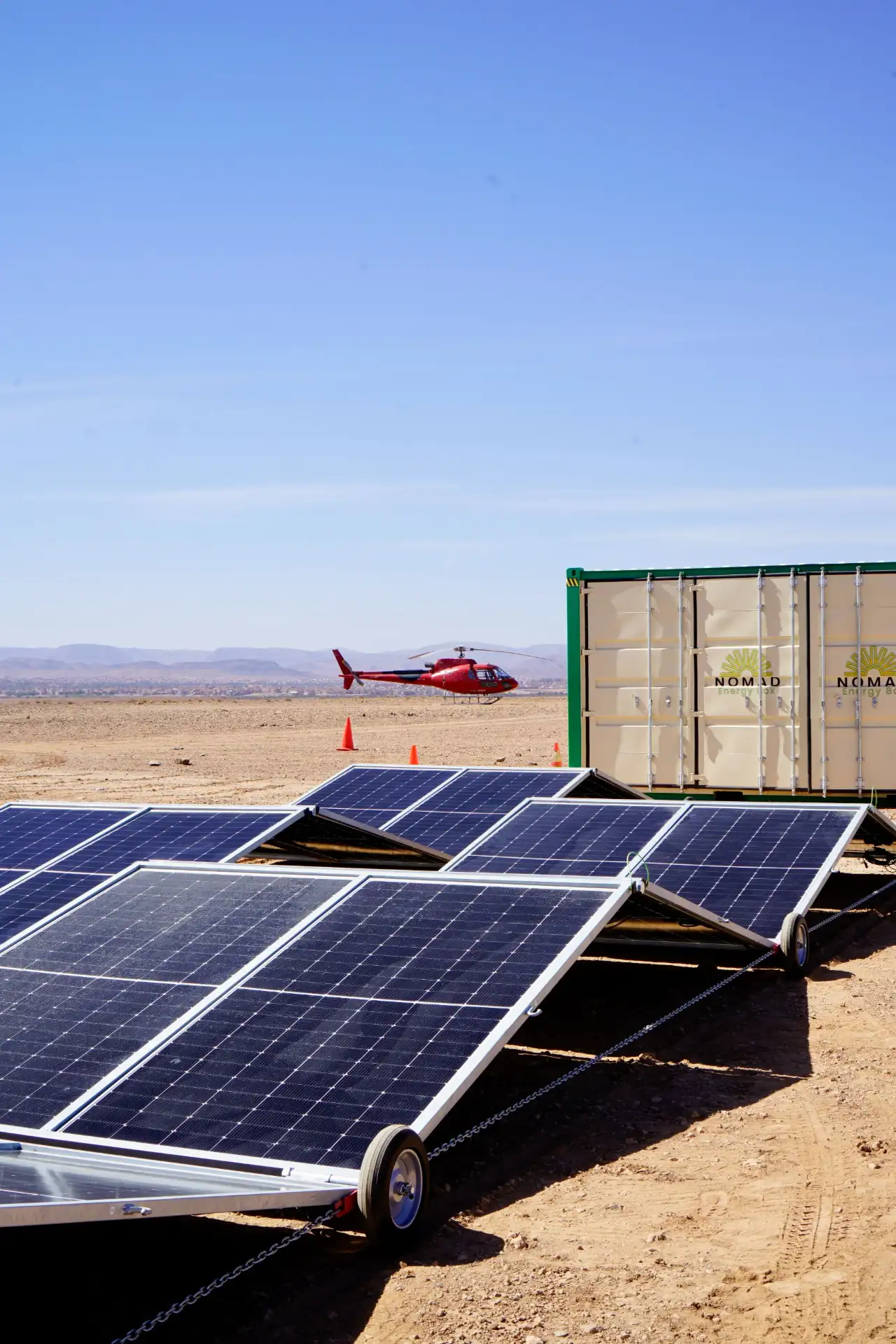
Expeditionary solar and battery power for Department of War forward operating bases, exercises, and austere sites. Containerized, factory-tested, and set up by small teams. Every gallon you stop convoying forward is one less resupply run to plan, guard, and protect.
A diesel generator at a forward site is only as reliable as the fuel line behind it. Every tank has to be planned, moved, guarded, and delivered, and every running engine tells someone where you are.
Generator fuel moves on the same roads and the same resupply cycle as everything else. Each run ties up vehicles, drivers, and security the mission needs somewhere else.
A running generator is loud and throws hot exhaust. At a forward position that is an acoustic and thermal signature you cannot switch off without losing power.
Engines need oil, filters, and service, and the parts have to be shipped forward too. When the fuel line is contested or cut, the generator stops with it.
Nomad systems make power on site from the sun and, in the Hybrid versions, store it for the night. They have no engine of their own to fuel and no exhaust plume, so less fuel has to be hauled forward.
Solar arrays unfold at the site and generate power there. Less generator fuel burn means fewer gallons to plan for, convoy, and protect. Your brief sizes the diesel each site can shed.
No engine noise and no hot exhaust from the power source. Hybrid versions carry onboard battery, so the site keeps power after sunset without starting a generator.
Pre-wired, factory-configured, and plug-and-play. No trenching, no foundations, no civil works. The Box 10 typically deploys in under an hour with two operators, the Tow in a typical 30 minutes.
Power versions are solar only, with no battery, and pair with the generators or storage already on site. Hybrid versions bring their own battery. Your brief sets the mix for each site.
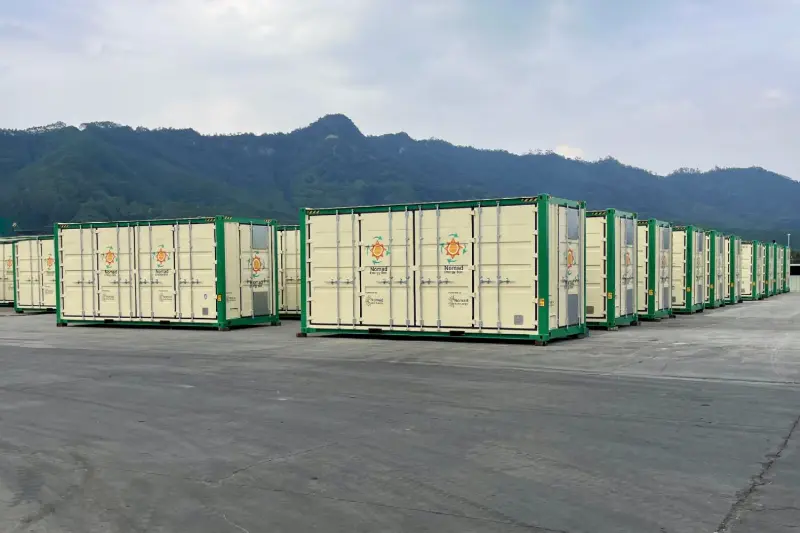
The flagship 20-foot ISO container for larger base camps: up to 107.1 kWp of solar, or a Hybrid with 122 kWh of onboard battery.
| Version | Solar | Battery | Inverter |
|---|---|---|---|
| Hybrid | 79kWp | 122kWh | 100kW |
| Power | 107.1kWp | None | 100kW |
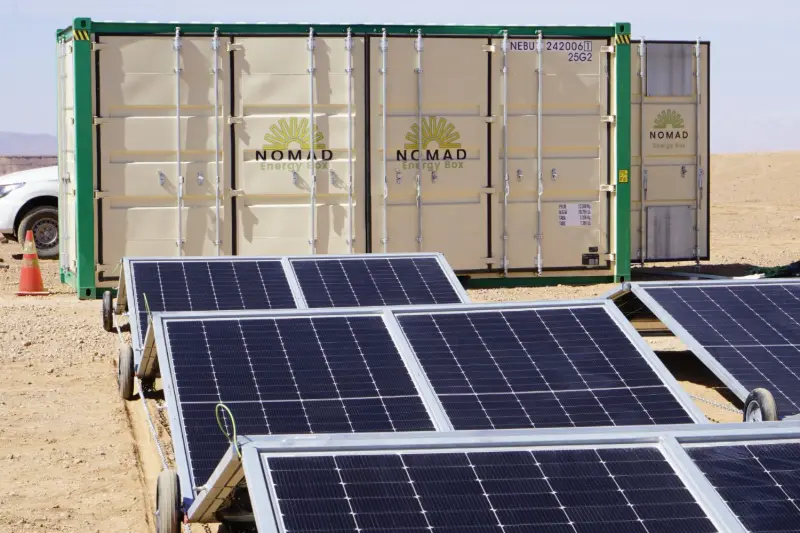
Deployed with Grupo Amper at the BACSI defense exercise, and typically running in under an hour with two operators.
| Version | Solar | Battery | Inverter |
|---|---|---|---|
| Hybrid | 23.8kWp | 61kWh | 50kW |
| Power | 47.6kWp | None | 50kW |
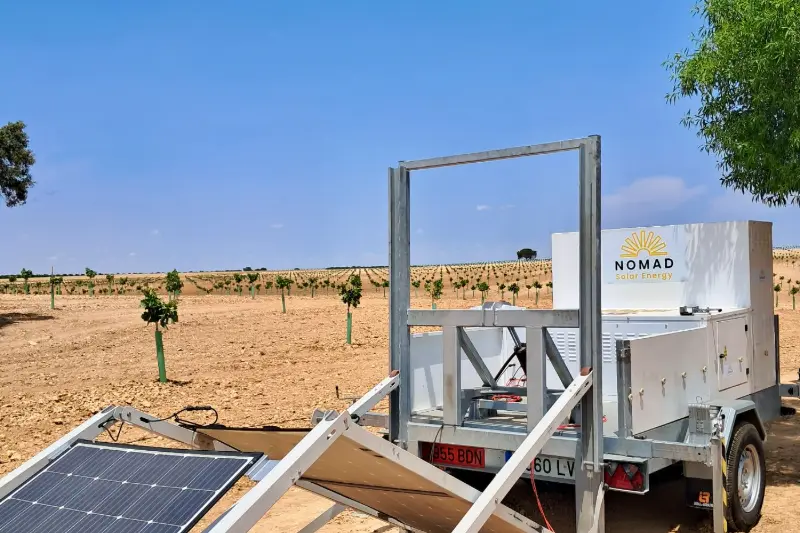
A 3,300 lb trailer that hitches to a suitable tow vehicle and typically deploys in 30 minutes for mobile and dispersed teams.
Forward sites run on generators, either one per load as spot generation or tied together on a microgrid. Power versions add solar beside those generators, and Hybrid versions move loads onto their own solar and battery, so the generators carry less of the load and burn less fuel.
Power versions are solar only, with no battery, and pair with the generators or storage already on the grid. The sun carries part of the daytime load, so the generators burn less fuel and need fewer deliveries.
Hybrid versions combine solar, onboard battery, and hybrid inverters in one unit. A Hybrid can carry its loads after sunset without starting a generator, as a self-contained solar and battery power system.
Each unit arrives pre-wired, with no civil works. Place units by load, such as the operations center, communications, and lighting, and add units for new loads as the mission grows.
Base and tactical microgrids differ in generators, distribution, and controls, and some programs specify the Tactical Microgrid Standard (MIL-STD-3071). Tell us yours in the brief, and engineering reviews whether and how Nomad systems can connect to it.
Own the system outright. Built for permanent sites, long programs, and fleets.
Spread the cost across a fixed term and keep capital free for the mission.
Short-term power for a project, exercise, event, or emergency.
Yes. A Nomad Energy Box 10 was deployed and demonstrated with Grupo Amper at BACSI, a Spanish Air and Space Force exercise for defense technology. Nomad Solar Energy, the manufacturer, is ISO 9001:2015 certified for the design, development, and manufacturing of power generation systems.
The Hybrid versions of the Box 20 and Box 10, and the Tow, carry onboard battery for power after sunset. The Power versions are solar only, with no battery, and pair with your existing generators or storage. Your brief sizes battery to your overnight load.
The Power versions are solar only and built to pair with external generators or storage, so those generators burn less fuel. Hybrid versions carry their own solar and onboard battery and power the loads connected to them. Whether and how a unit ties into a base or tactical microgrid depends on that microgrid's controls and, where a program specifies it, the Tactical Microgrid Standard (MIL-STD-3071). Your brief checks the fit with the generators and microgrid you field today.
Containers move by truck and are handled by crane or forklift. The Tow hitches to a suitable tow vehicle. Typical deploy times: Tow 30 minutes, Box 10 under an hour with two operators, Box 20 under 3 hours.
Every platform is available to purchase, lease, or rent. Your brief covers pricing for all three, transport and site logistics, supply-chain origin, warranty and U.S. service, and lead time to deploy. Every brief gets an engineering review, typically within one business day.
Tell us the location, the load, and the timeline. You get an engineering review, pricing to buy, lease, or rent, and a clear path to deploy, typically within one business day.
Copy your brief and send it to rturpin@nomadamerica.energy from any email account.