Fuel Can't Get In
Downed lines, flooded roads, and closed stations cut off resupply right when demand peaks. Every generator in the field is waiting on the same trucks.
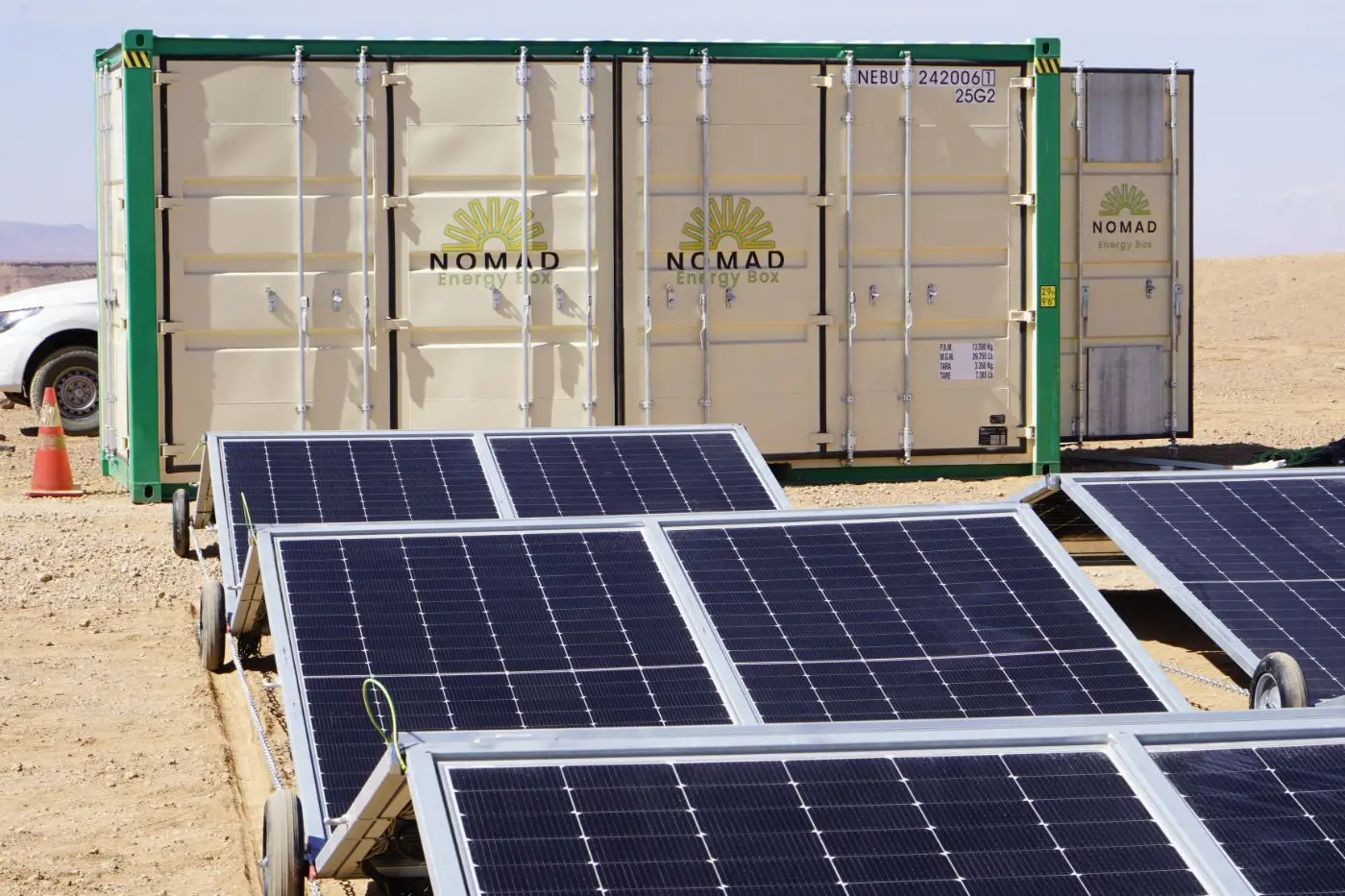
After a storm, fuel can be the first supply to fail. Nomad systems bring power, communications, and drinking water to staging areas and shelters without a fuel line. Pre-position them before the season or rent when the call comes.
When roads wash out and stations lose power, every generator in the response depends on a fuel delivery that may not come. Shelters, the EOC, and comms sites go dark when the tank runs dry.
Downed lines, flooded roads, and closed stations cut off resupply right when demand peaks. Every generator in the field is waiting on the same trucks.
Engines need fuel checks, oil, and service through long operational periods. Your teams spend shifts tending generators instead of serving survivors.
When the water system goes down, bottled water has to be trucked in on the same broken roads as fuel. Shelters and clinics feel it first.
Nomad systems make power from the sun at the site and do not wait on a fuel truck. Nomad Energy Water adds drinking water made from air, so shelters and staging areas lean less on resupply.
Solar generates where it stands. The Box 10 Hybrid stores 61 kWh in onboard battery for overnight operations, so lights and radios stay up without a fuel run.
Nomad Energy Water draws up to 264 gal of drinking water per day from the air, depending on humidity, powered by its own solar and battery.
The Box 10 is typically running in under an hour with two operators. Water typically deploys in under 3 hours. No trenching, no foundations.
Buy or lease units to stage before hurricane or wildfire season, or rent for a single event. Fold them up and move them as the response moves.
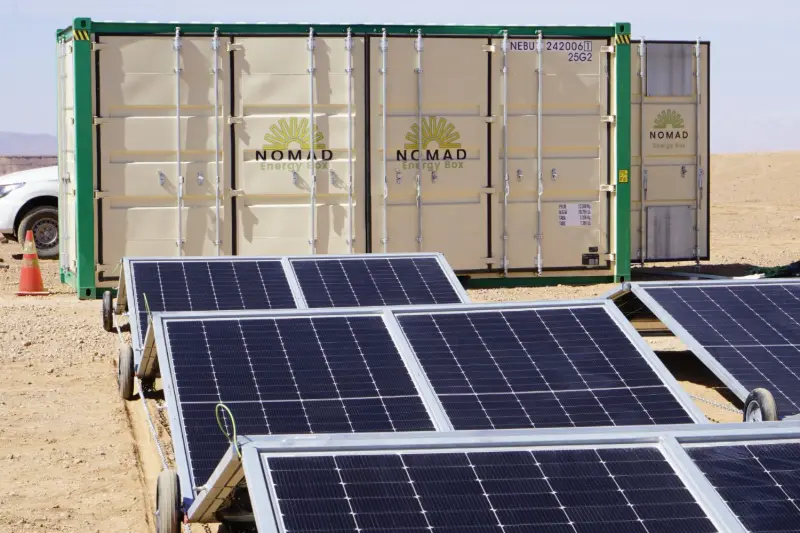
The smallest container in the lineup, the Box 10 is typically running in under an hour with two operators, and its Hybrid stores 61 kWh.
| Version | Solar | Battery | Inverter |
|---|---|---|---|
| Hybrid | 23.8kWp | 61kWh | 50kW |
| Power | 47.6kWp | None | 50kW |
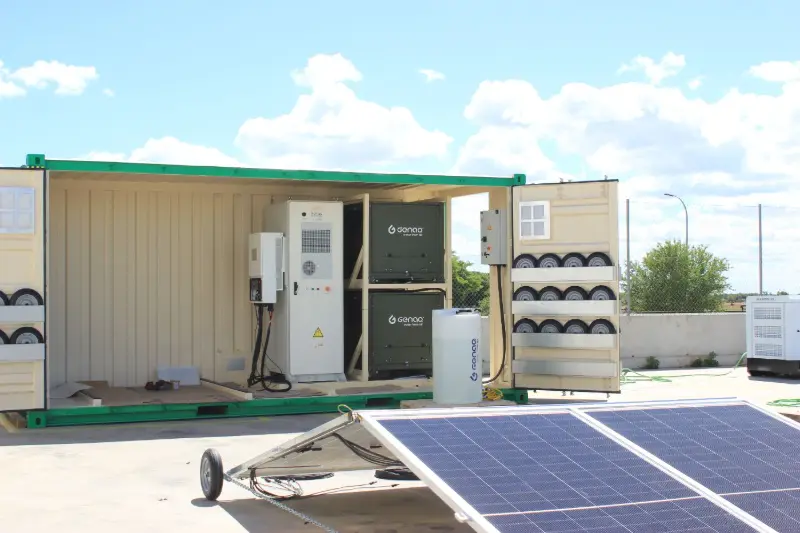
Up to 264 gal of drinking water per day depending on humidity, on its own solar and battery, with diesel or grid tie-in when needed.
Own the system outright. Built for permanent sites, long programs, and fleets.
Spread the cost across a fixed term and keep capital free for the mission.
Short-term power for a project, exercise, event, or emergency.
Yes. Buy or lease units to stage ahead of hurricane or wildfire season, or rent them for a specific event. Your brief covers pricing for all three, transport, and lead time to deploy.
The Box 10 Hybrid and Nomad Energy Water carry onboard battery for power after dark. The Box 10 Power version has no battery and pairs with generators or storage you already have. We size battery to your overnight load in the brief.
Up to 264 gal of drinking water per day, depending on humidity. It uses onboard atmospheric water generators and runs off-grid on solar and battery, or ties into diesel or grid power. Your brief covers how many units each site needs.
Containers move by truck and are set by crane or forklift. No trenching or foundations are needed. Typical deploy is under an hour for the Box 10 with two operators and under 3 hours for Water.
Pricing for purchase, lease, and rent comes in your brief, with an engineering review and a clear path to deploy, typically within one business day. The brief also covers transport, warranty and U.S. service, and supply-chain origin.
Tell us your region, your sites, and the season you plan for. Your brief covers pricing to buy, lease, or rent, transport, and lead time to deploy, typically within one business day.
Copy your brief and send it to rturpin@nomadamerica.energy from any email account.