The Short Version
- Size to two numbers: the peak power your loads draw at once (kW) and the energy they use per day (kWh).
- On a unit with onboard battery, the inverter sets the peak. The array and your peak sun hours set the daily energy. The battery sets how much of it reaches the night.
- Daily solar is roughly array kWp × peak sun hours × performance ratio. Our calculator uses 0.75 for the ratio.
- Treat every result as a planning estimate. An engineer checks it against your load profile and site in your brief.
Three Units You Need to Know
Most sizing mistakes come from mixing up power and energy. Keep these three straight and the rest is arithmetic.
- kW (kilowatts) is power: how much your loads draw at one moment. It decides whether the inverter can carry the site.
- kWh (kilowatt-hours) is energy: power over time. A 5 kW load running for 10 hours uses 50 kWh. It decides how much solar and battery you need.
- kWp (kilowatts peak) is the rated output of a solar array under standard test conditions. A 23.8 kWp array does not deliver 23.8 kW all day. It reaches that in ideal conditions and delivers less the rest of the time.
A battery is rated in kWh because it stores energy. An inverter is rated in kW because it limits power. A solar array is rated in kWp because its output moves with the sun.
Step 1: Find Your Load
There are two ways to get your daily energy use. Use both if you can, and trust the one with better data.
From your fuel logs
If generators run the site today, the fuel log already measures the load. Multiply gallons per day by the electricity your generator makes per gallon. Our calculator uses 12 kWh per gallon as a planning figure; a generator running at light load makes less. A site burning 30 gal a day at that figure uses about 360 kWh a day, an average of 15 kW around the clock.
From a load list
List every load with its power draw and the hours it runs: lighting, communications, refrigeration, heating and cooling, tools, chargers. Multiply each kW by its hours and add them up. Note the largest loads that run at the same time, and anything with a high starting current, such as motors, pumps, and compressors.
Then split the day. How much of the load runs while the sun is up, and how much after dark? Our calculator starts at 50% in daylight. An office-hours construction site may be well above that. A camp with lighting and heating or cooling at night may be below it.
Step 2: Check the Peak Against the Inverter
On a Hybrid or the Tow, the inverter decides the largest load the unit can carry at once. If your peak is above it, no amount of extra solar or battery will help: you need a larger platform, or you split the loads so the largest run on their own unit or generator. A Power version has no battery and works beside your generators or storage, which carry the peaks. Its inverter limits how much solar it can feed in at once.
| System | Inverter | Solar | Battery |
|---|---|---|---|
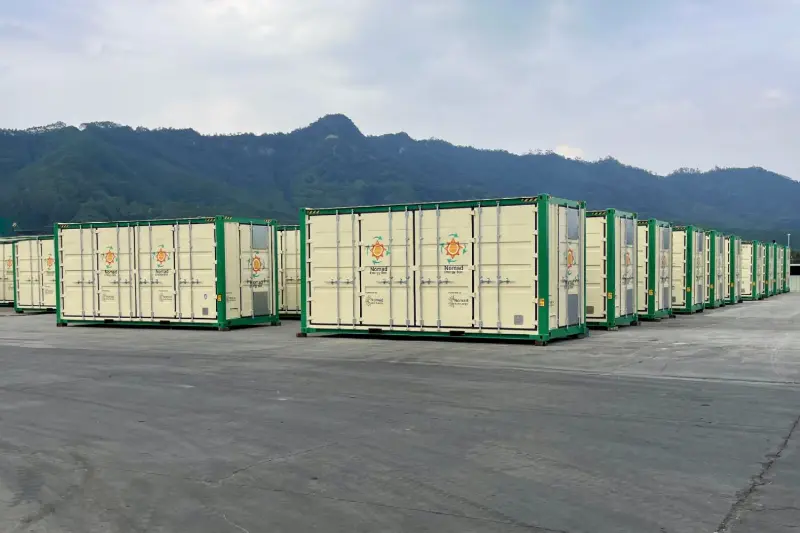
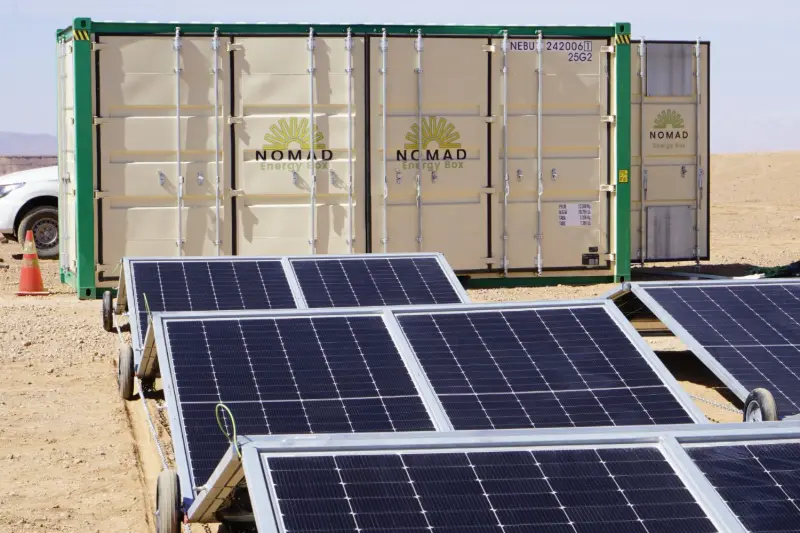
| Box 20 HybridSolar + onboard battery | 2 × 50 kW hybrid | 78.54 kWp | 122.88 kWh |
| Box 20 PowerSolar only. Pairs with generators or storage | 100 kW (110 kVA max) | 107.1 kWp | None |
| Box 10 HybridSolar + onboard battery | 1 × 50 kW hybrid | 23.8 kWp | 61.44 kWh |
| Box 10 PowerSolar only. Pairs with generators or storage | 50 kW | 47.6 kWp | None |
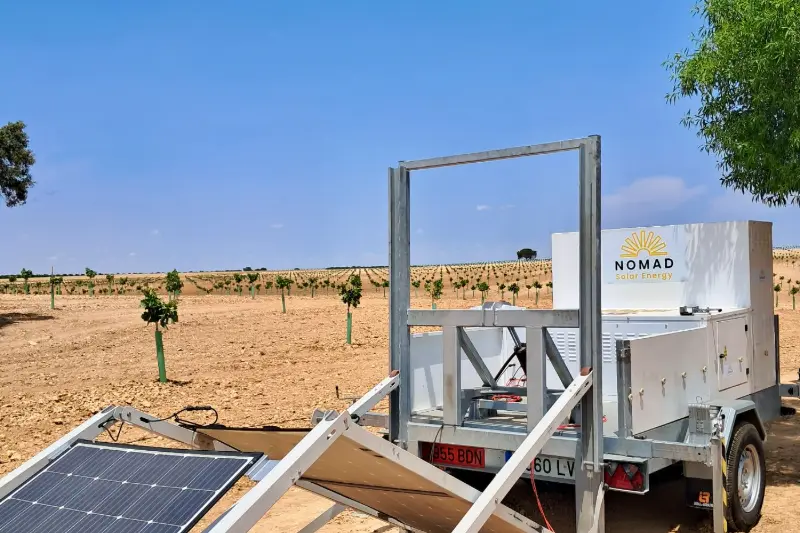
| TowTowable trailer, about 3,300 lb | 15 kW | 12 kWp | 20.48 kWh |
Look hard at motor starts. Motors, pumps, and compressors can draw several times their running power for a moment as they start, and if several start together the peak can sit far above the average. Staggered starts and soft starters bring that peak down. Leave headroom on top, and your brief checks the inverter against your actual load list.
Step 3: Estimate Daily Solar
A solar array's daily output depends on three things: its rated size, the sun at your site, and the losses between the panel and your load.
Daily solar (kWh) = Array (kWp) × Peak sun hours × Performance ratio
Peak sun hours are the hours per day of full-strength sunlight that would deliver the same energy as the real, changing sun. They are not daylight hours: a long summer day may hold far fewer peak sun hours than hours of light. The calculator offers these year-round planning figures by region, and accepts a custom value:
| Region | Peak sun hours / day |
|---|---|
| Desert Southwest | 6.5 |
| Mountain West and Plains | 5.5 |
| Texas and Southeast | 5.0 |
| Midwest and Northeast | 4.0 |
| Pacific Northwest | 3.5 |
The performance ratio covers the losses: heat, dust, wiring, and conversion. The calculator assumes 0.75, meaning three quarters of rated output reaches your load. Dusty or very hot sites may run lower, and clean panels hold up better.
Placement matters as much as the region. Set the array in the open, clear of shade from buildings, terrain, and other equipment through the middle of the day, when most of the energy arrives.
Plan with the season that matters. Peak sun hours fall in winter, and a site that has to run all year should be sized for its weakest months, or backed by a generator for them.
Step 4: Size the Battery to the Night
Solar covers the daylight share of your load first. What is left over can charge a battery, and the battery carries the site after dark. That puts three limits on how much diesel you can take off a site:
- Solar production. If the array makes less than the daylight load, there is nothing left to store.
- Battery capacity. If the array makes a surplus but the battery fills, the rest goes unused.
- Night load. The battery can only displace load that actually runs after dark.
A Hybrid carries its own battery for this. A Power version has no battery and pairs with the generators or storage you already run. The calculator models it beside a generator that stays on, so it covers daylight load only, and holds that generator at 30% of the daylight load as a minimum, so solar takes the rest. Generator makers usually state their minimum as a share of the generator's own rating, so a generator sized well above your load may need to carry more. Your brief checks it against the units you run.
Battery capacity in the calculator is taken at nameplate. Real usable capacity depends on how deeply the battery is cycled, which your brief accounts for.
A Worked Example
Take a site whose generators burn 30 gal of diesel a day, with 50% of the load in daylight. Here is what one Box 20 Hybrid could cover in three regions, using the calculator's default assumptions.
One Nomad Energy Box 20 Hybrid. Load: 360 kWh a day (30 gal × 12 kWh per gallon), 180 kWh of it in daylight. Performance ratio 0.75. Battery at nameplate. Figures per day.
| Figure | Desert Southwest | Texas and Southeast | Pacific Northwest |
|---|---|---|---|
| Peak sun hours | 6.5 hrs | 5.0 hrs | 3.5 hrs |
| Solar made | 383 kWh | 295 kWh | 206 kWh |
| Used as it is made | 180 kWh | 180 kWh | 180 kWh |
| Carried by battery | 123 kWh | 115 kWh | 26 kWh |
| Diesel not burned | 25.2 gal | 24.5 gal | 17.2 gal |
| Share of fuel burn | 84% | 82% | 57% |
| What sets the limit | Battery capacity | Solar production | Solar production |
Three things stand out. In the sunniest region, the array makes more than the site can use by day, and the battery fills before the night load is covered: the battery, not the panels, sets the ceiling. In the cloudiest region, little is left to store after the daylight load: production is the limit, and more units would raise the estimate. And in every case the result is a share of the fuel, not all of it: the rest of the load stays on diesel. These figures assume the generator is off while solar and the battery carry the site. A generator left running as backup burns fuel the estimate does not count.
You can reproduce every number here in the savings calculator, then change the assumptions to test a conservative case.
Step 5: Add Margin, Then Check It
A planning estimate is a starting point. Before you commit, account for what the simple model leaves out:
- Seasonal swings in sun, and runs of cloudy days.
- Load growth over the life of the site.
- Shading from buildings, terrain, or other equipment.
- Lower generator efficiency at light load, which can reduce real savings beside a Power version.
- How deeply the battery is cycled, and how it ages.
Multiple units can be deployed across a site, so sizing up does not have to mean a bigger platform. Compare every configuration in the systems comparison, and read solar vs diesel generators for when a Hybrid or a Power version fits.
When you request a brief, include your fuel logs or load list, your location, and how the site runs at night. An engineer checks the sizing against your load profile and returns a matched system with pricing to purchase, lease, or rent.