The Short Version
- A diesel generator turns fuel into power on demand. A solar generator makes power from the sun on site and, in Hybrid versions, stores it in an onboard battery for the night.
- Solar cuts the fuel you buy, haul, and store. At the planning figure our calculator uses, every 12 kWh of solar your loads use is about one gallon of diesel not burned.
- There is no engine to service: no oil, filters, or coolant. Panels, batteries, and inverters still need periodic checks.
- Choose Hybrid when the site needs power after dark without an engine running. Choose Power when you already run generators and want them to burn less fuel through the day.
How Each One Makes Power
A diesel generator is an engine coupled to an alternator. It burns fuel whenever there is load, and it can run as long as someone keeps the tank full. That makes it dispatchable: power is there at 2 a.m. and on the third cloudy day in a row, as long as fuel keeps arriving.
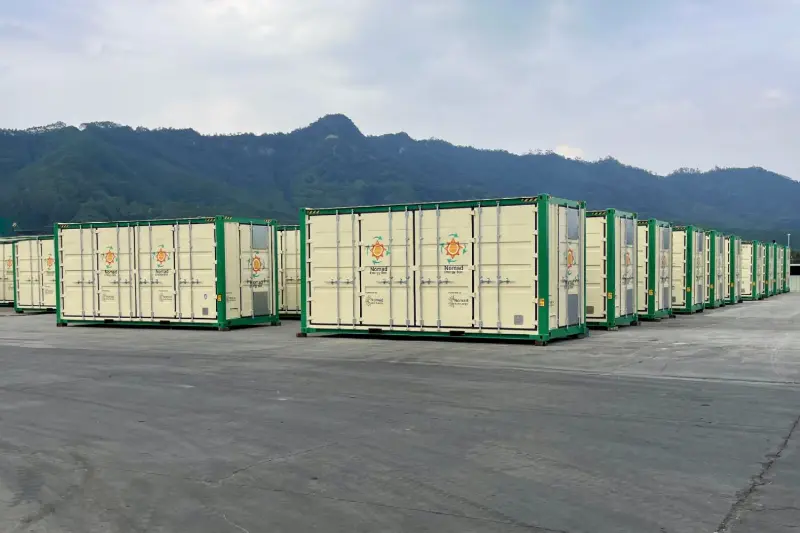
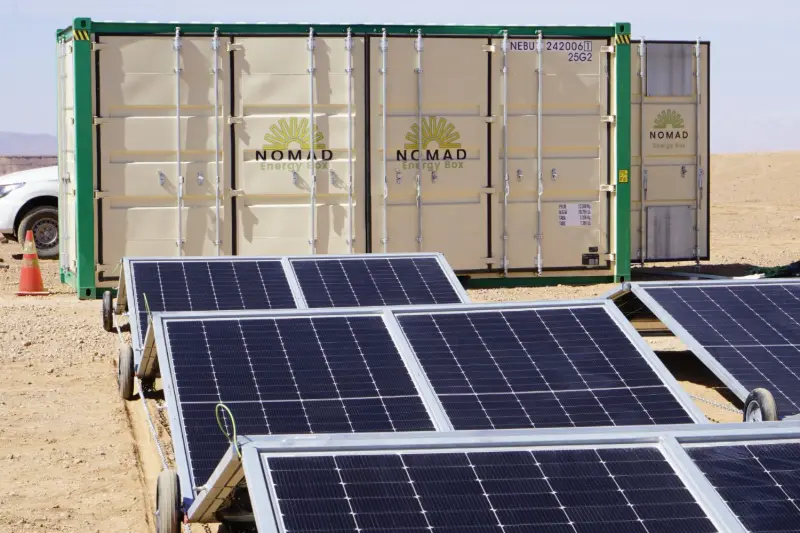
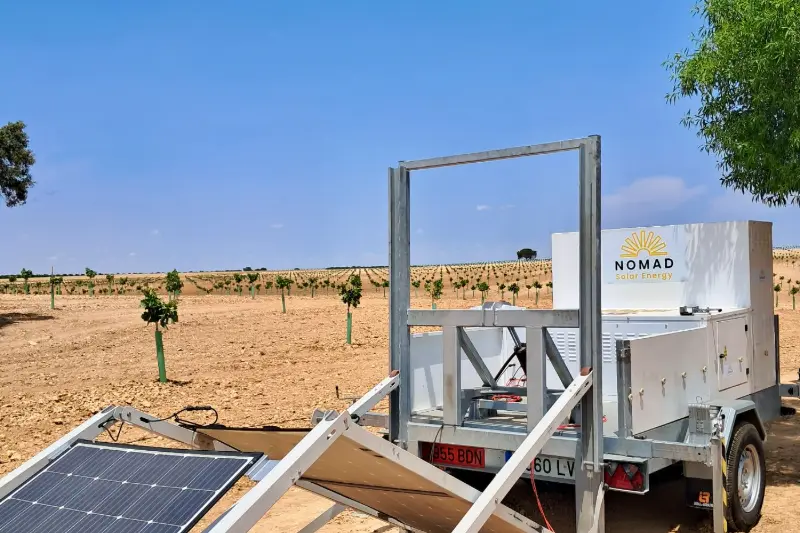
A mobile solar generator is a solar array, an inverter, and, in most configurations, a battery, packaged so it can be moved and set up without building a power plant. The array makes power while the sun is up. The inverter turns it into AC power for your loads. The battery stores the surplus for after dark. Nomad Energy systems arrive pre-wired and factory-tested in a container or on a trailer, and need no trenching, foundations, or civil works.
The practical difference is where the energy comes from. Diesel brings its energy with it, one delivery at a time. Solar collects its energy at the site, every day, for as long as the system is deployed.
Fuel: The Cost You Keep Paying
Fuel is the obvious difference, and it is bigger than the price per gallon. Diesel has to be ordered, delivered, stored, and protected from theft and spills. At a remote site, the delivery can take as much attention as the fuel itself: a truck to schedule, a road that washes out, a crew that waits.
Solar takes a share of that load off the generator. How large a share depends on how much of the load runs in daylight, how much sun the site gets, and whether a battery carries the surplus into the night. A rough conversion helps frame it. Our savings calculator assumes a generator makes about 12 kWh of electricity per gallon of diesel. At that figure, every 12 kWh of solar your loads actually use is about one gallon your generator does not burn.
Generators also burn more fuel per kWh at light load, and that cuts both ways. A generator sized for the peak but running most of the day at a fraction of it wastes fuel, which solar and a battery can avoid by letting the engine shut off. But a generator that keeps running beside solar at a lower load gets less efficient, so real savings can be lower than a simple conversion suggests. Your brief models it with the units you actually run.
Run your own numbers with your fuel burn and your region's sun. The calculator shows every assumption and never counts more than the fuel you burn today.
Noise and Exhaust
A running diesel engine is loud and puts out hot exhaust. On a construction site that means complaints and limits on working hours. On a film set it means long cable runs to push the generator out of the shot and away from the microphones. At a forward position it is an acoustic and thermal signature that tells someone where you are.
A solar generator has no engine. The array makes no noise, and there is no exhaust at the power source. Inverters and cooling equipment do make some sound, but there is no engine noise. Next to an engine running around the clock, the difference is obvious from the first night.
Quiet power matters most where people work and sleep close to it: events and film locations, crew camps, emergency response shelters, and defense positions.
Maintenance and Uptime
Diesel generators need regular service tied to run hours: oil and filter changes, coolant, belts, and fuel system care. Run one at light load for long stretches and you can get wet stacking, where unburned fuel builds up in the exhaust and the engine has to be loaded up to clear it. Every service visit means parts and a technician at the site, and every missed one raises the odds of a failure at the worst time.
A solar generator has no engine of its own: no engine oil or fuel filters, no refueling, and no engine to overhaul. The system still needs care: panels cleaned where dust builds up, connections and the battery checked, and the inverter monitored. That work is lighter and less frequent than engine service. A generator kept running beside a Power version still needs its regular service, and it should be held above its minimum load to avoid wet stacking.
Reliability works differently too. Diesel is dispatchable as long as fuel arrives. Solar is predictable over a season but varies day to day with the weather. That is why many sites end up with both.
When Diesel Still Fits
Solar does not have to replace every generator to be worth deploying. Diesel still makes sense when:
- The load is far larger than the solar you can place on the site, or spikes above the inverter rating.
- The site needs guaranteed power through several days of storms with little sun.
- The job lasts a day or two and the generator is already there.
- The site gets very little sun, or the array cannot be placed in the open.
In the first two cases, the answer is often diesel and solar, not one or the other. Solar takes as much of the daytime load as the array can carry, and a Hybrid's battery can carry part of the night. The generator covers the rest and burns less fuel. Your brief sets out how they share the site.
Hybrid or Power: Which Fits Your Site
The Nomad Energy Box 20 and Box 10 each come in two versions, and the choice comes down to the night load.
Hybrid: solar plus onboard battery
A Hybrid stores daytime solar in its own battery, so the site keeps power after sunset with no engine running. Choose Hybrid when the site has to run at night, when quiet matters, or when there is no generator on site to pair with. The Tow and the Water also carry their batteries onboard.
Power: solar only, built to pair
A Power version has no battery. It carries more solar in the same container and pairs with the generators or storage you already run. Paired with a generator, solar takes a share of the daytime load while the generator keeps running at a lower output, so it burns less fuel. At night, the generators or your storage carry the site. Choose Power when you already own the generators and want them to burn less fuel through the day. To shut the engine off for hours at a time, choose a Hybrid.
| System | Solar | Battery | Inverter | Typical Deploy |
|---|---|---|---|---|
| Box 20 HybridSolar + onboard battery | 78.54 kWp | 122.88 kWh | 2 × 50 kW hybrid | Under 3 hours |
| Box 20 PowerSolar only. Pairs with generators or storage | 107.1 kWp | None | 100 kW (110 kVA max) | Under 3 hours |
| Box 10 HybridSolar + onboard battery | 23.8 kWp | 61.44 kWh | 1 × 50 kW hybrid | Under an hour, two operators |
| Box 10 PowerSolar only. Pairs with generators or storage | 47.6 kWp | None | 50 kW | Under an hour, two operators |
See the full specifications on the Box 20 and Box 10 pages, or every system on one page in the systems comparison.
Moving and Setting Up
A towable diesel generator is easy to move, and that is a real advantage. Mobile solar closes most of the gap. The Box 20 and Box 10 are containers that move by truck and are placed by crane or forklift. The Tow hitches to a suitable tow vehicle. Typical deploy times are 30 minutes for the Tow, under an hour with two operators for the Box 10 Hybrid, and under 3 hours for the Box 20, depending on the site.
When the job ends, the array folds back up and the system moves on to the next site.
Next Steps
Start with the fuel you burn today. Enter it in the savings calculator to see the gallons a system could offset, then read how to size a mobile solar generator to check the numbers against your load. When you are ready, request a brief: an engineer reviews your load and site and returns a matched system with pricing to purchase, lease, or rent, typically within one business day.